2026 Emergency Binder
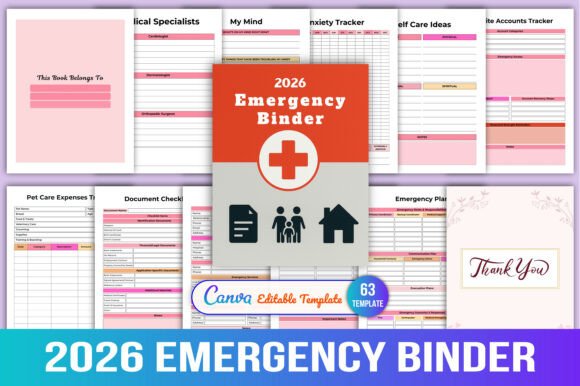
The 2026 Emergency Binder isn’t just another printable planner—it’s a deliberate, process-oriented foundation for household resilience. It sits at the intersection of preparation and execution: not a reactive checklist after crisis hits, but an active, living system you build, maintain, and rely on across daily life, unexpected disruptions, and long-term planning cycles. For professionals juggling remote work and caregiving, educators managing family logistics alongside classroom responsibilities, or freelancers operating without HR or admin support, this binder fills a structural gap—turning fragmented information into coordinated readiness.
Think of it as your household’s operational dashboard. Just as a project manager aligns timelines, resources, and stakeholders before launch, the 2026 Emergency Binder surfaces critical dependencies *before* they become bottlenecks: Who has access to your medical records? Where is the water shutoff valve—and who knows how to use it? Is your pet’s vaccination history updated and physically accessible if a neighbor needs to step in? These aren’t hypotheticals. They’re workflow prerequisites—conditions that must be satisfied for continuity, whether during a power outage, sudden travel disruption, or health event.
How It Fits Into Real Workflows
Integration starts with intention—not perfection. You don’t need to complete every section in one sitting. Instead, treat the 2026 Emergency Binder like a sprint backlog: identify one high-leverage area based on your current context and commit to filling it within 20 minutes.
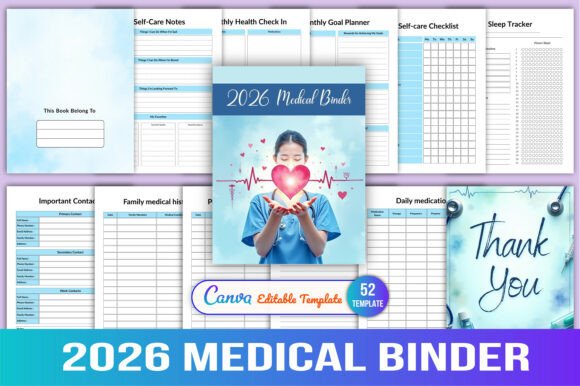
- If you’re renewing insurance or scheduling annual physicals: Use the Medical Tracker pages to log appointment dates, medication changes, and allergy updates—all in real time. Cross-reference with your insurance ID cards (scanned and stored in the Important Document Checklist) to verify coverage details match what’s recorded.
- If you’re planning a family trip or relocating: Pull from the Car & Travel Expense Trackers to benchmark fuel, lodging, and contingency costs—then compare against actuals post-trip. This turns anecdotal budgeting into data-informed decision-making for future trips.
- If you’re onboarding a new caregiver, house sitter, or remote team member: Hand them the Emergency Contacts Sheet and Home Utilities Info section—not as a PDF attachment, but as a printed, tabbed reference. Clarity here reduces miscommunication, delays, and stress when time matters.
This isn’t about “getting ready for disaster.” It’s about reducing cognitive load during normal operations so you have mental bandwidth left for what actually requires attention—like supporting a child’s learning, launching a client project, or recovering from burnout.
Compatibility With Your Existing Tools
The 2026 Emergency Binder works *alongside*, not against, digital systems. Password Logbook entries, for example, shouldn’t replace a password manager—but they *do* serve as a verified, offline master list for emergency access. Store encrypted backups of critical logins in your cloud drive, then keep the printed binder in a fireproof safe or desk drawer. That way, if devices fail or accounts get locked, you retain control without compromising security hygiene.
Similarly, the Mental Health Self-Care Section complements—but doesn’t substitute for—therapy or clinical care. Use the Anxiety Tracker to spot patterns over weeks: Do spikes correlate with workload deadlines? Sleep disruption? Medication timing? Those insights inform conversations with providers and help calibrate personal boundaries more precisely than memory alone allows.
For small business owners or solopreneurs, the binder extends beyond personal use. The Family Information Pages double as a streamlined onboarding doc for trusted contractors or part-time staff who may need temporary access to home systems (e.g., HVAC service techs, cleaning crews). The Pet Details Section ensures continuity if you’re unexpectedly traveling for a conference or client meeting—no last-minute panic calls to find backup care.
Building Consistency Without Burnout
Sustained use hinges on low-friction maintenance—not rigid schedules. Assign one “anchor moment” each month: while reviewing bank statements, update the Password Logbook. While restocking first-aid supplies, verify the Home Utilities Info page matches current provider contacts and account numbers. These micro-actions take under five minutes and compound into reliable accuracy.
Usability improves with physical design choices. Print on 24–28 lb paper for durability. Use color-coded tabs (e.g., red for Emergency Contacts, blue for Medical, green for Pets) so sections are identifiable at a glance—even in low light or high stress. Keep a fine-tip pen permanently clipped inside the front cover. That small habit eliminates the “I’ll do it later” delay when you remember a doctor’s note or change in vet hours.
Quality control happens quietly: every time someone references the binder successfully—whether it’s your teenager finding the utility company number during a blackout or your partner locating insurance details before an urgent appointment—you reinforce its value. That builds natural motivation to keep it current.
Long-Term Use: From Setup to System
In year one, focus on completeness: populate core sections, verify contact info, store physical documents. In year two, shift to refinement: prune outdated entries (e.g., expired prescriptions), add contextual notes (“Dr. Lee prefers email over phone for non-urgent questions”), and annotate recurring patterns (“Heater serviced every November—add reminder to the 2026 Calendar”).
By year three, the 2026 Emergency Binder becomes less of a “tool” and more of an institutional memory—especially valuable during transitions: moving homes, changing jobs, welcoming a new family member, or caring for aging parents. Its dated structure (2026-specific calendar, renewal reminders tied to that year) prevents drift. Unlike generic templates that gather dust, the date anchor creates built-in review points—making obsolescence harder to ignore.
For educators and content creators, it also serves as a teaching artifact. Walk students or audience members through your own anonymized version: show how tracking vaccination dates supports public health literacy, or how documenting pet routines builds empathy and responsibility. Real-world modeling beats theoretical instruction every time.
Practical Implementation Tips
Start with what’s most fragile right now. If passwords are scattered across sticky notes and browser autofill, begin with the Password Logbook. If your family hasn’t reviewed evacuation routes in years, open the Emergency Planning Pages first. Match effort to urgency—not idealism.
Store the binder where it’s both secure *and* reachable: not buried in a closet, but not on a coffee table either. A lockable filing cabinet in your home office or a designated shelf in the kitchen pantry works well. Add a laminated card inside the front cover listing three people authorized to access it—and their contact details—so others know who to call if you’re unavailable.
Finally, treat it as a shared asset—not a solo task. Rotate “binder stewardship” quarterly among adult household members. One person updates medical info, another verifies pet records, a third audits emergency contacts. This distributes responsibility, surfaces gaps faster, and builds collective confidence in the system.
The 2026 Emergency Binder succeeds not because it anticipates every scenario, but because it makes response predictable. When variables increase—weather volatility, healthcare complexity, remote work dependencies—the consistency of having verified, organized, accessible information becomes your most reliable leverage point. It doesn’t eliminate uncertainty. It shrinks the space where uncertainty causes harm.