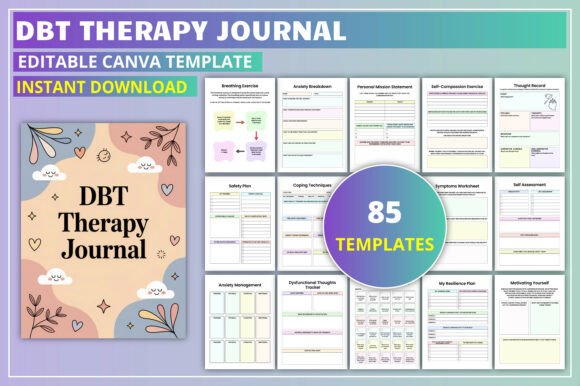
DBT Therapy Journal KDP Interior
A well-structured DBT Therapy Journal KDP Interior isn’t just a collection of pages—it’s a functional workflow asset designed for creators who build, sell, and scale mental health resources. Whether you’re publishing on Amazon KDP, offering digital downloads through your own site, or supporting clients in a clinical or coaching practice, the interior layout directly impacts usability, conversion, and long-term value. This isn’t about aesthetics alone; it’s about how structure supports behavior change, how page sequencing mirrors therapeutic progression, and how file readiness reduces friction between design and delivery.
Where It Fits in Your Publishing or Practice Workflow
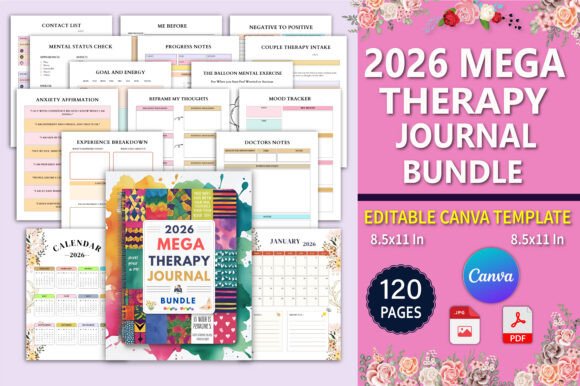
The DBT Therapy Journal KDP Interior sits at the intersection of clinical utility and production efficiency. Before launching a journal, you’ll likely finalize your therapeutic framework—identifying core DBT modules (mindfulness, distress tolerance, emotion regulation, interpersonal effectiveness) and aligning each with evidence-informed exercises. Once that foundation is set, the interior becomes the operational translation: turning theory into daily practice tools like the Anxiety Breakdown worksheet or Reframe My Thoughts tracker. It’s not a static document—it’s a living component of your content pipeline.
During development, the interior interacts directly with your file delivery system. The inclusion of high-resolution JPG and PNG files ensures compatibility with KDP’s upload requirements, while the editable Canva link allows rapid iteration without design software. That means if a therapist client requests a version with simplified language or adjusted spacing for neurodivergent users, you can adapt the layout in under 20 minutes—not days. That flexibility feeds directly into responsiveness, scalability, and audience trust.
Using the Interior Across Real-World Scenarios
Consider three common use cases—and how the interior supports each:
- For Amazon KDP publishers: You prepare the interior once, then reuse it across multiple niches—e.g., pairing the same Symptoms Tracker and Meditation Tracker layouts with different cover designs for anxiety-focused vs. trauma-informed editions. Consistent internal structure builds brand recognition; varied front matter and branding keeps listings distinct.
- For therapists or coaches: You download the PDF, print double-sided on 100gsm paper, bind with a spiral coil, and hand it to clients during intake. The Belongs To page personalizes ownership early; the Personal Mission Statement section grounds work in values—not just symptoms. No reformatting needed. What arrives is production-ready.
- For digital product creators: You drop the editable Canva link into your course platform as a bonus resource. Learners customize colors and fonts to match their personal brand or accessibility needs—then export as PDF to use alongside video lessons on emotional regulation. The interior doesn’t replace instruction; it extends it into daily application.
Integration With Other Tools and Systems
The DBT Therapy Journal KDP Interior works best when treated as a node—not an island. Its value multiplies when connected thoughtfully:
- With scheduling tools: The Appointment Planning and Doctor Visits Log pages pair naturally with Google Calendar reminders or Notion trackers. Users log sessions first in the journal, then sync key takeaways to their master planner.
- With habit apps: A client using Finch or Habitica might track daily mindfulness via the Meditation Tracker, then enter streak data manually into their app. The journal captures qualitative insight—the “why” behind missed days—that apps rarely collect.
- With clinical documentation: Therapists use the Dysfunctional Thoughts Tracker and Thoughts Discovery sections during session prep. They review patterns across clients (anonymized), spot recurring cognitive distortions, and adjust psychoeducation accordingly—turning individual journaling into practice-level insight.
This interoperability depends on clean, modular design. Each worksheet stands alone but shares consistent typography, spacing, and instruction phrasing. That uniformity lets users shift between sections without cognitive load—and lets you repurpose components across products without visual whiplash.
Practical Implementation Tips
Start small—but start with intention. Don’t try to use every page at once. Instead, map one high-impact section to a specific goal:
- Pick one trigger point: If your audience struggles most with morning anxiety, begin with the Anxiety Preparation and Anxiety Log pages. Use them for three days. Note what’s missing—more space? Simpler prompts?—then adjust using the Canva link.
- Test print fidelity: Before bulk uploading to KDP, order a physical proof. Check margin alignment on the Survival Planner and bleed handling on full-page trackers. Small shifts in gutter width affect writing comfort—and return rates.
- Batch customizations: If selling multiple versions (e.g., teen edition, workplace edition), update headers, icons, and color palettes in Canva all at once. Save each variant as a separate PDF—no need to rebuild from scratch each time.
- Track usage, not just completion: In your own practice or customer feedback loop, ask: Which worksheets get written in? Which sit blank? The Stress Management Worksheet may be used weekly, while Self-Compassion Exercise sees sporadic but deep engagement. That tells you where to add prompts—or simplify instructions.
Long-Term Usability and Quality Control
A strong DBT Therapy Journal KDP Interior earns repeat use—not just one-time purchase. That requires attention to durability in both form and function:
- Layout resilience: Pages like the Daily Thought Tracker use generous line spacing and subtle grid lines—not rigid boxes. That accommodates varied handwriting sizes and reduces frustration for users with motor challenges.
- Instruction clarity: Every worksheet includes concise, action-oriented prompts (“Name one sensation you noticed during this moment”) rather than abstract questions (“What did you feel?”). Clarity prevents abandonment mid-exercise.
- Consistency across formats: The JPG, PNG, and PDF files render identically on screen and in print. No font substitution issues. No misplaced checkboxes. That predictability builds user confidence—and reduces support requests.
- Scalable organization: Sections are grouped by function—not alphabetically. Anxiety tools live together. Self-reflection tools cluster separately. That mirrors how users actually think during emotional escalation or growth phases.
Over time, revisit your interior not as a finished artifact—but as a maintained system. Update terminology if DSM or APA guidelines shift. Add new trackers based on emerging client needs (e.g., social media impact logs). Archive outdated versions—but keep them labeled and accessible. A journal interior evolves because human needs do.
Final Integration Note
The DBT Therapy Journal KDP Interior gains its full utility when it moves beyond passive consumption and into active participation. It’s not meant to be filled neatly and shelved. It’s meant to be dog-eared, annotated, revisited, and occasionally rewritten. Whether you’re preparing your first KDP upload, printing for a group workshop, or adapting pages for telehealth handouts—the interior serves best when treated as infrastructure: reliable, adaptable, and quietly supportive of real behavioral change.