Digital 2026 Craft Business Bundle: A Practical Evaluation for Independent Makers
For craft entrepreneurs—whether launching a first Etsy shop, scaling a home-based pottery studio, or managing seasonal craft fair booths—the challenge isn’t just making beautiful things. It’s staying organized across overlapping responsibilities: inventory tracking, tax preparation, marketing deadlines, customer follow-ups, and financial logging—all while preserving creative energy. The Digital 2026 Craft Business Bundle positions itself as an all-in-one digital planning system built specifically for this reality. Unlike generic planners or fragmented software tools, it offers a unified, editable collection of 50+ purpose-built templates—designed to be used together, not in isolation.
What Sets the Digital 2026 Craft Business Bundle Apart
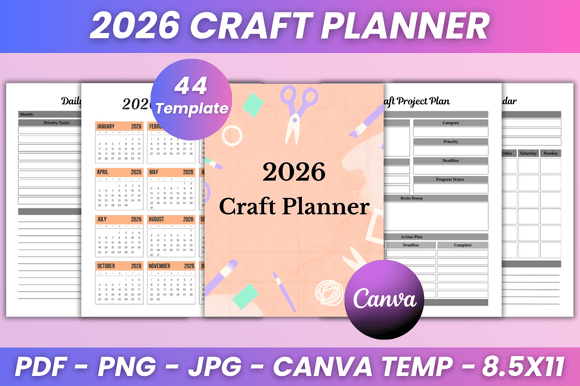
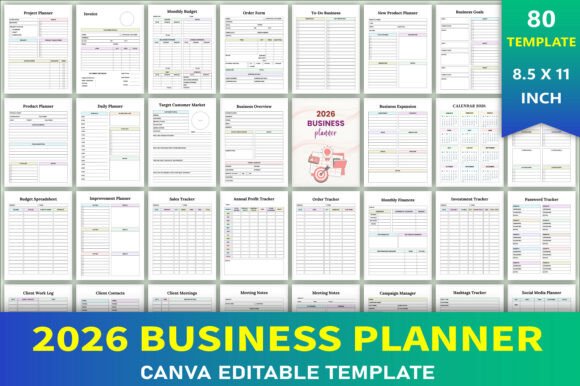
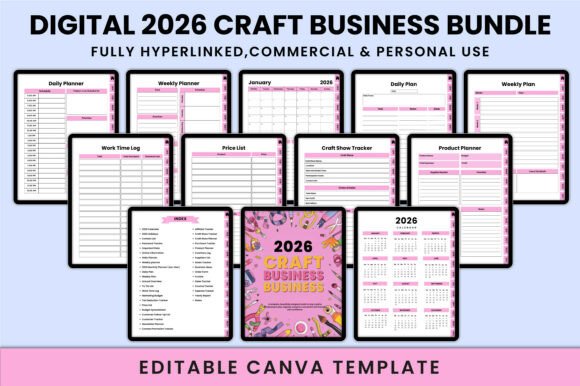
At its core, the Digital 2026 Craft Business Bundle is a hyperlinked, editable digital workbook—not a subscription service, app, or cloud platform. Its structure reflects deep familiarity with craft-specific workflows: it includes trackers for craft shows (both planning and post-event evaluation), product development timelines, supplier contact logs, and even a dedicated Craft Show Planner with booth layout notes and inventory pre-checklists. These aren’t repurposed corporate templates; they’re calibrated for makers who juggle handmade production, small-batch fulfillment, and direct-to-customer sales.
The bundle’s technical execution supports real-world use: CMYK color mode and 300 DPI resolution mean printable versions maintain professional quality, while the included Canva link allows for easy visual customization—logo placement, brand color updates, or layout tweaks without design expertise. The hyperlinked index enables fast navigation between related tools—for example, clicking “Inventory Log” from the “Product Planner” tab takes you directly there, reducing friction during daily use.
How It Compares to Other Planning Approaches
Many craft business owners evaluate options across three broad categories: digital-only tools (like Notion or Airtable), printable PDF planners, and dedicated business software (e.g., QuickBooks, Square Dashboard). The Digital 2026 Craft Business Bundle occupies a distinct middle ground—more structured than a blank Notion database, more flexible than rigid accounting software, and more integrated than standalone PDFs.
Compared to building a custom Notion workspace: The Digital 2026 Craft Business Bundle saves significant setup time. While Notion offers limitless flexibility, most crafters report spending 10–20 hours configuring databases, relations, and views before achieving basic functionality. This bundle delivers ready-to-use, logically grouped sheets—from Daily Planner to Tax Deduction Tracker—with consistent formatting and interlinking already in place.
Compared to standard printable planners: Most PDF-based planners focus on time management or goal setting alone. Few include operational tools like a Purchase Tracker tied to a Suppliers List, or a Newsletter Planner synced to a Content Promotion Tracker. The Digital 2026 Craft Business Bundle bridges that gap by treating marketing, finance, and operations as interconnected—not siloed tasks.
Compared to full business software: Tools like QuickBooks excel at invoicing and tax reporting but lack support for craft-specific needs—tracking booth fees per show, calculating material cost per handmade item, or scheduling social media posts around craft fair dates. The Digital 2026 Craft Business Bundle doesn’t replace accounting software but complements it, capturing data upstream (e.g., Sales Tracker, Expense Tracker) before export to formal financial systems.
Strengths and Realistic Tradeoffs
One of the strongest advantages of the Digital 2026 Craft Business Bundle is its intentional scope. It avoids feature bloat. There’s no built-in email automation, no AI-generated content, no live collaboration features—and that’s by design. It assumes users want control, privacy, and simplicity over real-time syncing or algorithmic suggestions. For solo makers or small family-run studios, this reduces cognitive load and eliminates recurring costs.
A key tradeoff is dependency on user discipline. Like any planner, its value scales with consistent input. A Customer Follow-Up List only helps if updated after each sale; a Work Time Log only reveals productivity patterns if logged daily. It won’t auto-import Etsy orders or sync with PayPal—but that also means no third-party data sharing or API limitations.
Another consideration is format flexibility. While the Canva link enables light editing, users needing deep spreadsheet automation (e.g., dynamic profit-margin calculations across hundreds of SKUs) may find the included Budget Spreadsheet or Price List templates useful as starting points—but not fully scalable replacements for Excel or Google Sheets with advanced formulas.
When It Fits—and When It Might Not
The Digital 2026 Craft Business Bundle tends to serve best when:
- You’re running a craft business with moderate complexity—multiple product lines, 3–10 craft shows per year, email newsletters, and occasional wholesale inquiries—but not enterprise-level inventory or team management needs.
- You prefer ownership and portability: having all your business records in files you control, downloadable, printable, and usable offline.
- You’ve tried apps or spreadsheets but struggle with fragmentation—e.g., goals in one place, finances in another, marketing ideas scattered across notes apps—and want a single source of truth designed for your workflow.
- You value visual clarity and are comfortable using Canva or basic spreadsheet functions to personalize layouts or adjust columns.
It may be less suitable if:
- You require automated data syncing—e.g., pulling sales figures directly from Shopify or updating inventory counts in real time across platforms.
- Your team collaborates daily across time zones and needs shared editing, version history, or commenting features beyond what a shared Google Drive folder offers.
- You rely heavily on analytics dashboards, forecasting models, or integrations with CRM or email marketing services (Mailchimp, Klaviyo).
- You’re primarily focused on digital products or service-based offerings rather than physical handmade goods—some trackers (e.g., Craft Show Tracker, Inventory Log) align less directly with those models.
Practical Use Across the Year
Consider how the Digital 2026 Craft Business Bundle supports seasonal rhythms. In January, the Annual Overview and Goals Tracker help set intentions; by March, the Craft Show Planner and Purchase Tracker coordinate supply orders for spring fairs; come August, the Newsletter Planner and Content Promotion Tracker align holiday campaign timing; and in December, the Yearly Report and Income/Expense Trackers consolidate data for tax prep—all within the same file structure.
A potter preparing for a July craft fair might use six linked sections in one sitting: checking booth requirements in the Craft Show Planner, verifying stock levels in the Inventory Log, updating pricing in the Price List, logging material purchases in the Purchase Tracker, reserving time in the Weekly Planner, and adding follow-up tasks to the To-Do List. That level of contextual cohesion is rare in modular tools.
Making an Informed Choice
No single resource solves every challenge—but the Digital 2026 Craft Business Bundle addresses a well-defined gap: the need for an integrated, craft-specific, low-overhead planning system that respects both business rigor and creative autonomy. It’s not a replacement for accounting software or e-commerce platforms, nor is it meant to be. Instead, it functions as the operational backbone—organizing what tools don’t automate and connecting what apps keep separate.
If you’re evaluating planning resources, ask yourself: Do I spend more time switching between tools than using them? Do my current systems capture *how* I make things—not just *what* I sell? Does my planning reflect the actual cadence of craft production, seasonal demand, and hands-on work? When those questions point toward integration, intentionality, and usability—not just features—the Digital 2026 Craft Business Bundle becomes a compelling, practical option worth testing alongside alternatives.