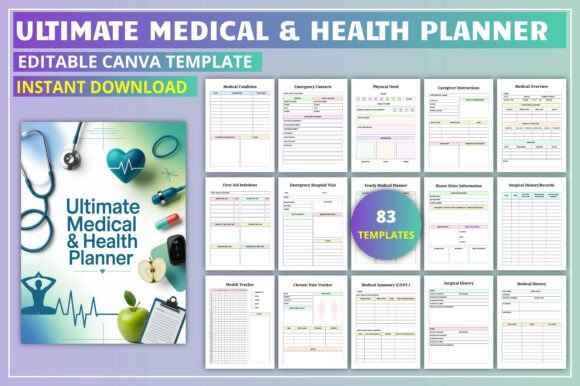
Ultimate Medical Health Planner
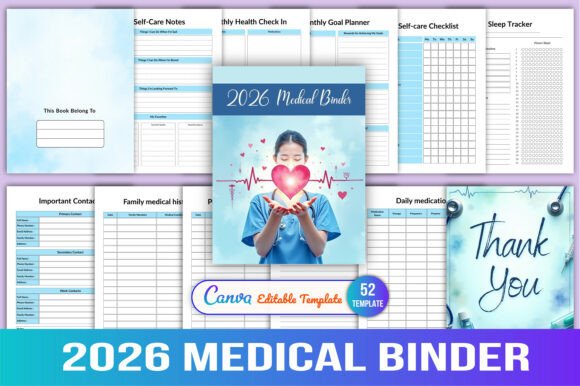
Keeping track of health information across doctors, specialists, labs, and daily wellness routines is rarely simple — especially when life moves fast. Paper notes get lost. Apps auto-sync but don’t always let you control formatting or share easily. Spreadsheets work for some, but lack structure for medical nuance like family history timelines or symptom patterns. That’s where the Ultimate Medical Health Planner stands out: it’s not just another checklist — it’s a thoughtfully organized, clinically grounded system designed to meet real-world needs without overcomplicating them.
More Than Notes — A Coordinated Health Framework
This planner bridges gaps between personal care and professional communication. For someone managing chronic conditions like hypertension or diabetes, having dedicated, consistent spaces for blood pressure readings, glucose logs, and medication timing helps spot trends faster than memory alone allows. A caregiver coordinating appointments for an aging parent can use the Appointment Details and Appointment Notes pages to record not just when a visit happened, but what was discussed, what tests were ordered, and which follow-ups are pending — all in one place, ready to share with other family members or providers.
The Ultimate Medical Health Planner includes two versions of the Health Tracker, letting users choose layout preference or alternate between daily and weekly review modes. Unlike generic journals, each tracker aligns with common clinical reporting standards — for example, the Blood Pressure Tracker separates systolic/diastolic values and notes activity or stress level at time of reading, supporting more meaningful interpretation during doctor visits.
Customization That Serves Purpose — Not Just Aesthetics
The editable Canva version isn’t about swapping colors for fun. It’s about adapting the tool to your actual workflow. A small clinic might rebrand the cover and add their logo before printing physical copies for new patients. A health educator could insert custom teaching prompts beside the Family Medical History section to guide group discussions. A freelance content creator building a wellness brand might adjust fonts and headers to match their existing templates — then resell the planner on KDP as part of a curated digital toolkit.
Because the Canva file is fully editable — including text boxes, icons, and layout grids — users aren’t limited to surface-level tweaks. You can reorder sections, add local lab reference ranges next to vitals trackers, or translate key headers for bilingual households. The included high-resolution PDF, JPG, and PNG files ensure clean printing or digital use across devices — no pixelation, no formatting surprises.
Who Benefits Most — And Why Timing Matters
The Ultimate Medical Health Planner works especially well for people entering transitional health phases: newly diagnosed individuals learning to manage a condition, parents navigating pediatric specialist referrals, adults preparing for major surgery, or caregivers stepping into long-term coordination roles. These moments demand clarity, consistency, and confidence — not extra cognitive load.
Take migraine tracking, for instance. The dedicated Migraine Tracker asks for triggers (e.g., sleep disruption, dietary changes), duration, pain scale, and rescue interventions used. Over time, this builds a personal dataset far richer than “I had a bad headache.” When shared with a neurologist, it shifts the conversation from guesswork toward pattern recognition and targeted adjustments.
Similarly, the Chronic Pain Tracker goes beyond rating intensity. It captures location, movement impact, medication timing, and emotional context — helping users and providers distinguish between flare-ups driven by inflammation versus stress or fatigue. That kind of granularity supports better-informed decisions, whether adjusting treatment plans or setting realistic daily goals.
Realistic Fit — Knowing When This Tool Fits Best
This planner shines when users value structure *and* flexibility — those who want guidance without rigidity. It’s ideal if you prefer tangible layouts over app notifications, or if you regularly print, annotate, and file documents. It’s less suited for users who exclusively rely on cloud-based syncing across multiple devices or need automatic reminders and data export to EHR systems.
It also assumes a baseline comfort with self-documentation. Someone overwhelmed by diagnosis may benefit more from starting with just two sections — say, the Medication List and Appointment Details — before gradually incorporating vitals or symptom logs. That’s intentional design: the planner supports progressive engagement, not all-at-once pressure.
Supporting Caregivers and Families Without Burnout
Families often become de facto health coordinators — scheduling, translating jargon, remembering dosages, tracking side effects. The Belongs To Page and Personal Details sections help standardize how critical info is recorded across household members. The Medical Summary Continued page gives space to summarize ongoing treatments, recent test results, and current concerns — something immensely useful during ER visits or urgent consults when time is short and clarity is essential.
For multi-generational households, the Family Medical History section encourages documenting patterns across relatives — not just diagnoses, but age of onset and lifestyle context. That kind of record becomes invaluable for preventive care planning and genetic counseling conversations down the line.
Why Format Choice Matters for Long-Term Use
The dual-format delivery — printable PDF + editable Canva — addresses two practical realities. First, many users still prefer writing by hand for reflection and retention; the print-ready files support that instinct cleanly. Second, digital customization ensures the planner grows with changing needs: updating insurance details, adding telehealth appointment fields, or integrating with personal branding for resale.
Unlike static PDF planners locked in fixed layouts, the Canva version lets you adjust spacing for larger handwriting, insert checkboxes for habit-building, or even embed QR codes linking to trusted health resources. That adaptability extends usability far beyond the first download.
A Tool Designed for Clarity, Not Clutter
There’s no filler here — every tracker, log, and summary page serves a documented clinical or logistical purpose. The Oxygen Saturation Log includes columns for activity level and respiratory symptoms. The Vitamin Checklist separates daily essentials from occasional supplements, reducing decision fatigue. Even the Measurements Tracker accommodates waist, hip, and neck circumference — relevant for metabolic health monitoring beyond weight alone.
That attention to functional detail means less time reformatting and more time acting on insights. Whether you’re prepping for your next annual physical, supporting a loved one through recovery, launching a wellness-focused digital product, or simply aiming to show up more confidently in healthcare conversations — the Ultimate Medical Health Planner meets you where you are, with room to grow.