Anxious Attachment Workbook
If you’ve ever found yourself overthinking a text, replaying conversations for hidden meaning, or feeling overwhelmed by fear of abandonment—even in stable relationships—you’re not alone. These patterns often stem from anxious attachment: a relational style rooted in early experiences that shape how we seek closeness, interpret signals from others, and regulate emotion under stress. The Anxious Attachment Workbook is designed not as a quick fix, but as a grounded, compassionate companion for the work of rewiring those patterns—step by thoughtful step.
A Resource Built for Real Life, Not Just Theory
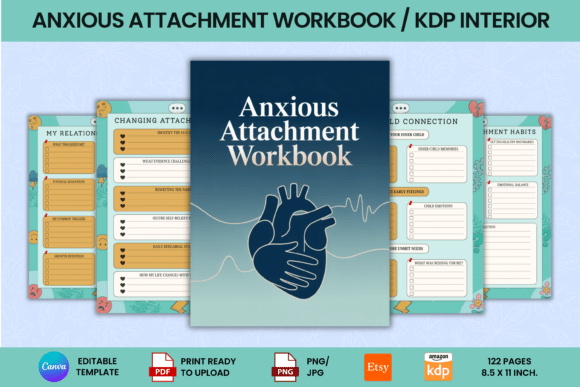
This isn’t a generic journal or a collection of vague affirmations. The Anxious Attachment Workbook contains 13 focused sections, each anchored in evidence-informed practices—from attachment theory and internal family systems to cognitive-behavioral reflection and somatic awareness. It guides users through tangible exercises like mapping relationship cycles, identifying core fears beneath reactivity, and practicing clear, kind communication *before* conflict escalates. One therapist shared how a client used the “Changing Attachment Story” section to rewrite a recurring narrative—“I’m too much”—into a grounded statement rooted in observable evidence: “I express care deeply, and I’m learning to trust that my needs are valid.” That shift didn’t happen overnight—but it began on page 47, with a prompt that asked, “What would your most secure self say right now?”
Why Editability Matters—Especially for Professionals
For therapists, coaches, and educators, time is scarce—and customization is essential. A one-size-fits-all handout rarely meets the nuanced needs of diverse clients. The Canva-editable format of the Anxious Attachment Workbook lets professionals adapt language, adjust spacing for neurodivergent readers, add practice-specific examples (e.g., “How might this show up in remote work teams?”), or embed organizational branding—all without design expertise. One small-group facilitator added custom reflection questions to the “Inner Child Connection” section after noticing participants consistently struggled with self-compassion during boundary-setting. She printed those revised pages as standalone handouts—no extra licensing, no formatting headaches.
Structure That Supports Consistency—Without Pressure
Consistency matters more than intensity when building new neural pathways. The workbook’s built-in 2026 calendar, year-at-a-glance layout, and monthly check-ins aren’t decorative extras—they’re scaffolds. A freelance writer recovering from burnout used the “Mental Health Check-In” page every Sunday evening—not to judge her week, but to notice trends: “When my workload spiked, my ‘core fears’ score went up, but so did my use of the ‘Healthy Attachment Habits’ list. That told me the tools were working—even if I didn’t feel ‘fixed.’” The inclusion of blank notes pages and dated prompts means users can engage at their own pace, returning to sections as insights deepen—no forced linear progression.
Who Benefits Most—and When It Fits Best
The Anxious Attachment Workbook serves three overlapping audiences well:
- Individuals in active growth work: Especially those already in therapy or coaching who want structured, private reflection between sessions—or those exploring attachment patterns independently with intention.
- Mental health professionals: Who value clinically coherent content they can confidently assign, annotate, or integrate into psychoeducation modules.
- Digital creators and educators: Building downloadable resources for courses, newsletters, or community offerings—where credibility, usability, and clean visual hierarchy matter.
It’s less suited for crisis intervention or as a replacement for clinical treatment. Someone experiencing acute anxiety, dissociation, or trauma symptoms may need additional support before engaging deeply with self-guided material. Similarly, while the editable cover and branding options help creators position the resource professionally, those planning large-scale commercial distribution should review licensing terms for PNG assets and ensure compliance with Canva’s content usage policies.
More Than Pages—A Framework for Relational Clarity
Attachment patterns aren’t static traits—they’re adaptive strategies formed in response to early environments. The Anxious Attachment Workbook honors that complexity by moving beyond symptom management. Take the “My Relationship Patterns” section: it doesn’t just ask, “What do you do when you feel insecure?” It invites users to track triggers, physical sensations, automatic thoughts, and responses across multiple relationships—revealing patterns that might otherwise stay invisible. One educator noticed her “reassurance-seeking” habit appeared most strongly with authority figures—not peers—which redirected her focus toward healing childhood dynamics with teachers and mentors, rather than blaming current friendships.
Practical Design Choices With Purpose
The 8.5 × 11-inch US Letter size with bleed ensures crisp printing—critical for therapists handing out physical copies or creators preparing print-on-demand versions. The 122-page count balances depth with approachability: enough space for meaningful exploration, but not so many pages that users feel daunted before opening. Including both a 2026 calendar *and* holiday dates supports real-world planning—someone scheduling therapy appointments or setting relational goals can align intentions with actual dates, not abstract timelines. And the “This Book Belongs To” page? A small detail, yes—but for clients rebuilding self-worth, claiming ownership of their healing journey starts with writing their name on the first page.
Supporting Growth—Not Just Tracking It
Self-awareness without support can sometimes deepen shame. That’s why the Anxious Attachment Workbook intentionally pairs insight-generating prompts with regulation-focused tools—like breath anchors embedded in the “Core Fears & Insecurities” section, or sentence stems in “Clear Kind Communication” that reduce the cognitive load of expressing vulnerability. A small business owner used the “Healthy Attachment Habits” checklist not as a to-do list, but as a weekly reflection: “Which habits did I practice *without realizing it*? Where did I default to old patterns—and what made that different this time?” That subtle reframing—focusing on presence, not perfection—makes sustainable change possible.
A Tool That Grows With Its User
Attachment work isn’t about erasing sensitivity or need—it’s about cultivating safety within oneself so closeness with others becomes less threatening and more nourishing. The Anxious Attachment Workbook supports that evolution not by prescribing answers, but by offering thoughtful questions, gentle structure, and room to breathe. Whether you’re guiding clients, creating resources, or walking your own path toward secure relating, it meets you where you are—with clarity, care, and quiet confidence in the process.