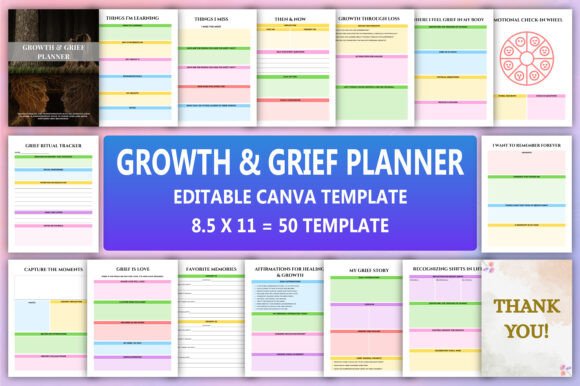
Navigate Healing and Transformation with Grace: The Growth Grief Planner as a Compass for Life After Loss
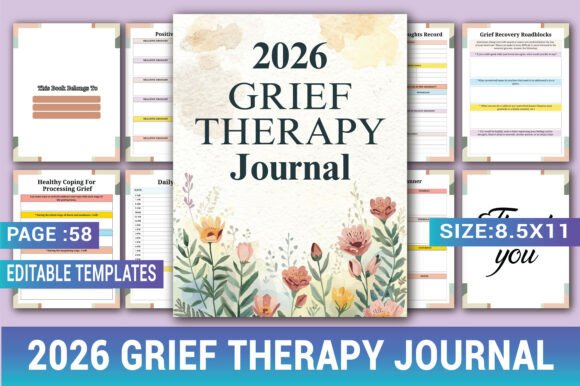
Grief is not a problem to be solved—it’s a profound human experience to be held, witnessed, and honored. Yet in a world that often prioritizes productivity over presence, many of us feel pressure to “move on” before we’ve truly moved through. That’s where the Growth Grief Planner steps in—not as a fix, but as a gentle, intentional companion. Designed for anyone navigating loss—whether it’s the death of a loved one, the end of a relationship, a health diagnosis, or even the quiet grief of unmet expectations—this guided journal meets you where you are, without judgment or timeline.
Why a Planner Built for Grief—and Growth—Matters Today
In modern life, grief is frequently isolated, medicalized, or rushed. We’re told to “stay strong,” “keep busy,” or “focus on the positive”—messages that can unintentionally silence our authentic emotions. Meanwhile, mental wellness tools often fall into two categories: clinical workbooks (rigid, symptom-focused) or generic journals (lacking structure for deep emotional processing). The Growth Grief Planner bridges that gap. It’s grounded in evidence-informed practices—including narrative therapy, somatic awareness, ecotherapy, and positive psychology—yet written with warmth, accessibility, and reverence for individual pace.
This isn’t about replacing professional support. Rather, it’s about offering daily, low-barrier access to compassionate self-guidance—especially during moments when reaching out feels overwhelming. Think of it like having a trusted friend who shows up each morning with space, questions, and quiet encouragement—not answers.
How It Works: A Holistic Framework for Healing
The planner’s power lies in its integrated design. Rather than treating grief as purely emotional, it acknowledges how loss lives in the body, reshapes identity, alters daily rhythms, and invites new meaning-making. Here’s how its core features support that whole-person journey:
- 🧠 Guided Reflection Prompts: These aren’t vague questions like “How are you feeling?” Instead, prompts evolve with your process—e.g., “What emotion showed up most this week? Where did you notice it—in your breath, shoulders, voice?” or “What small moment felt tenderly alive today?” This scaffolds insight without overwhelm.
- 💬 Daily Affirmations & Mood Check-Ins: Not toxic positivity—but affirmations rooted in permission and presence: “It’s okay to rest. My healing doesn’t need to look like anyone else’s.” Paired with simple mood trackers (color-coded or word-based), these build emotional literacy over time.
- 📓 Grief Memory Journals: A dedicated, non-linear space to write unsent letters, describe shared laughter, sketch a favorite place, or record sensory memories (the smell of their cologne, the sound of their laugh). This honors memory without demanding closure.
- 🌀 Body-Mind Awareness Tools: The Emotional Check-In Wheel helps name complex feelings beyond “sad” or “angry.” Physical grief mapping invites noting where tension, numbness, or energy resides—linking bodily sensation to emotional release, a key principle in trauma-informed care.
- 🌿 Ecotherapy Nature Logs: Grief can feel isolating—but nature offers quiet reciprocity. Prompts invite noticing seasonal shifts, sitting with wind or rain, or planting seeds as metaphor and action. Research confirms nature engagement reduces cortisol and supports reflective capacity—making it more than poetic; it’s neurologically supportive.
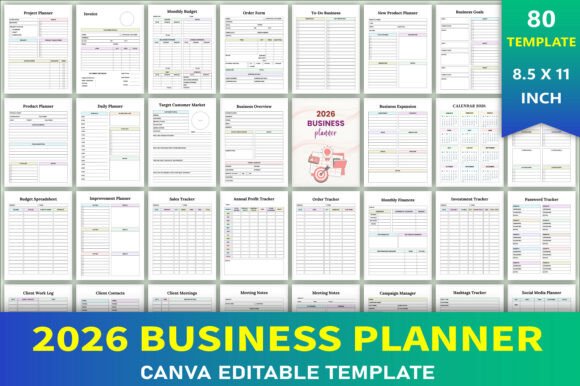
- 📆 Daily, Weekly, Monthly Planners: Unlike standard planners that assume constant output, these include emotional buffers—“Energy Forecast” slots, “Non-Negotiable Rest” reminders, and goal-setting that accounts for fluctuating capacity. This normalizes pacing as strength, not failure.
- 🎯 SMART Goals & Habit Trackers: Goals here aren’t about achievement—they’re about alignment. “Walk barefoot on grass twice this week” or “Say ‘no’ to one optional commitment” builds agency gently. Tracking celebrates consistency, not perfection.
- 🕯️ Rituals of Remembrance: From lighting a candle on anniversaries to creating a memory box or writing a letter to read aloud at a favorite park—these rituals transform abstract longing into embodied honoring. They also support legacy integration: how does love continue to shape who you are?
Dispelling Common Misconceptions About Grief Work
Many assume grief journals are only for early, acute loss—or that “growth” implies leaving pain behind. Neither is true. The Growth Grief Planner supports people months or years post-loss, helping uncover evolving identities, renewed values, and unexpected sources of joy. Growth doesn’t mean forgetting; it means making room for both sorrow and meaning to coexist.
Another myth: “If I’m journaling, I must be ‘getting better.’” In reality, grief often moves in spirals—not lines. One day may hold clarity; the next, raw disorientation. The planner validates that. Its flexible structure allows skipping days, reusing prompts, or circling back—no guilt, no scorekeeping.
Who Benefits Beyond Individual Users?
While deeply personal, the Growth Grief Planner also serves wider contexts:
- Caregivers & Support Partners: Offers language and structure to understand what their loved one might be experiencing—without needing to “fix” anything.
- Educators & Counselors: Used ethically in school wellness programs or group therapy (with consent), it provides consistent, stigma-free entry points for students or clients exploring loss.
- Workplace Wellness Initiatives: As organizations recognize grief’s impact on focus, retention, and empathy, tools like this support compassionate leave policies and return-to-work transitions.
- Creative Practitioners: Writers, artists, and musicians use its prompts to channel grief into expression—transforming pain into poetry, visual art, or music that resonates with others.
More Than Paper: A Philosophy Woven Into Every Page
The Growth Grief Planner reflects a deeper truth: healing isn’t about returning to who you were—it’s about becoming someone who carries love and loss with equal tenderness. Its eco-conscious materials (recycled paper, soy-based ink) mirror its values: sustainability, respect, and interconnection. Even the layout breathes—ample margins, soft fonts, intentional whitespace—modeling the very grace it invites.
Consider this example: On a Tuesday, you might trace your hand in the journal, labeling each finger with a memory (“thumb: her hands holding mine in the hospital”; “pinky: our inside joke about burnt toast”). Later, you log how your shoulders softened during a 5-minute forest walk. By month’s end, those scattered entries reveal patterns—how connection eases isolation, how movement unlocks feeling, how memory isn’t static, but living.
Your Journey, Honored—Not Measured
There’s no “right” way to use the Growth Grief Planner. Some fill pages daily. Others open it only when grief surges unexpectedly. Some tear out ritual pages to frame. Others gift completed journals to family members as heirlooms of love-in-action.
What remains constant is its invitation: You don’t have to navigate this alone. Your grief matters. Your growth matters. And both can unfold—not despite each other, but because of their sacred entanglement.
If you’re reading this while carrying loss, please know this: Your tenderness is not weakness. Your pauses are not setbacks. Your willingness to show up—even imperfectly—is the quietest, bravest kind of courage. The Growth Grief Planner won’t erase the ache, but it will help you hold it with more kindness, more curiosity, and more grace. And sometimes, that’s the first, most vital step toward living fully again.